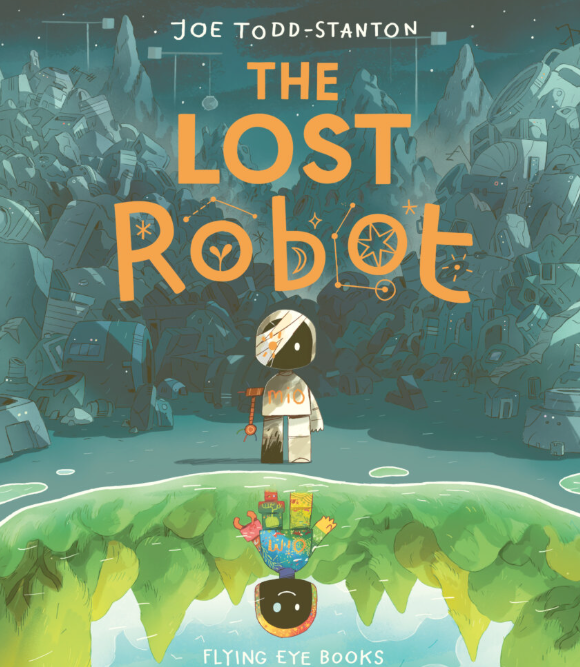
The Wisp: A story of hope
By Zana Frailon and Kate Greenaway, Orchard books 2018
This is a story the reader will remember for a long time. It is about a boy, Idris who has lived all his life in a refugee camp. One night hope blows in on the night wind in the form of a wisp. The wisp seeks out an elderly man and triggers in him the ghost of a smile. He sings his memories. Next it seeks out a woman whose memories make a forest bloom in the dust. Finally, the wisp blows for Idris himself. He doesn’t have memories of somewhere better, but the wisp becomes a promise. It makes him dance with hope. The illustration shows him riding a bicycle through beautiful countryside, no longer stuck in a refugee camp. The book will help children understand what hope means.
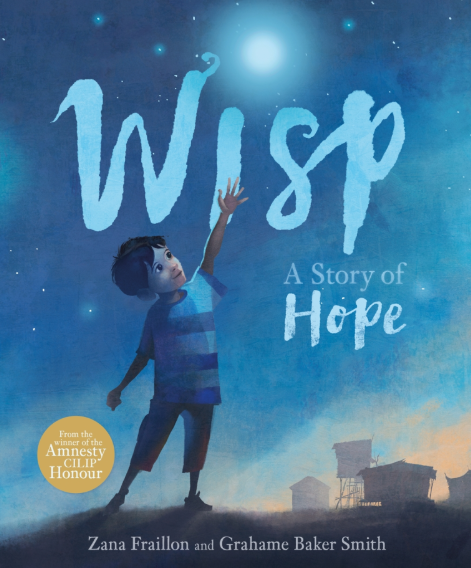
The Promise
By Nicola Davies and illustrated by Laura Carlin, Walker Books, 2013
This book opens with an evocative introduction to a depressing, broken city. The weather is cleverly used. The streets are cracked by extremes of temperature. Rain is much needed but there is none. Weather, nature and humanity are drawn together when a girl’s heart is described as being shrivelled like the park trees.
The girl is a mugger who even mugs an old lady. It is impossible not to be intrigued when the old lady agrees to let go of her bag if the girl ‘plants them.’ Later, the girl finds the bag is full of acorns. This changes her. She plants them all over the ugly, barren city. At this point in the book there is the first colour in the illustrations. They were grey up to this point but now a tree is full of colourful birds. The girl goes from city to city planting. One day, in an alley, a young mugger tries to steal her sack of acorns. Read the book to find out where this leads!
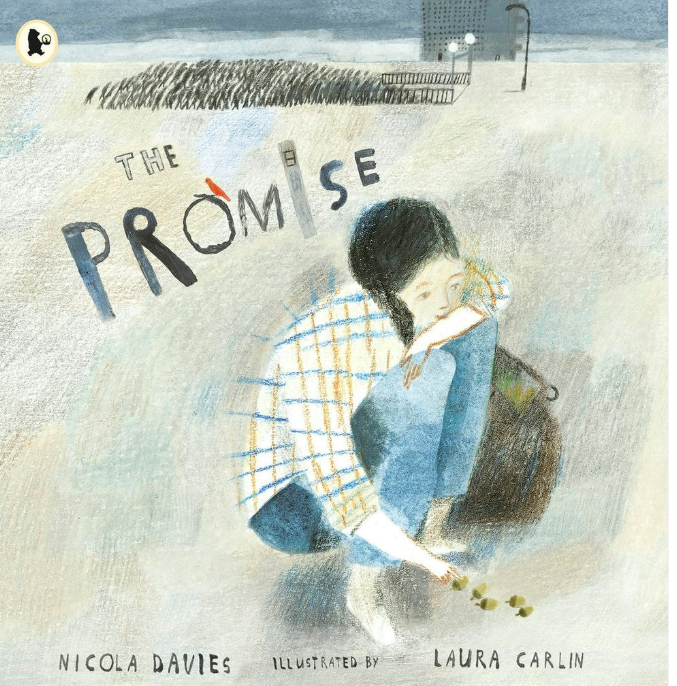
The space between
By Claire Helen Welsh and illustrated by Fiona Lumbers, Andersen Press, 2025
I loved the way that this book explores an emotional task that gets less attention than most. This is the task of adjusting to a new situation. The example in this story is that a girl is struggling to settle into her new home and make new friends. Her grandma explains that she is in ‘the space between.’ They look at the sky where it isn’t night-time yet, but it soon will be. They look at the beginnings of a spider’s web. Because it is in the space between, it is not a web yet but soon it will be.
The grandma explains the best approach is to enjoy the now and the space between too. The child cleans a window and tries to enjoy the space between the window being dirty and clean, the space between starting and finishing the task. She discovers too that she needs to spend time with other people in their space between and to sit with them for however long it takes.
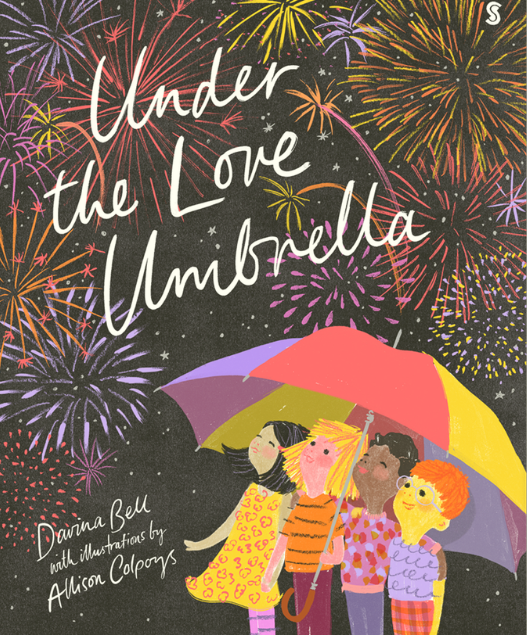
Under the Love Umbrella
By Davina Bell illustrated by Alison Colpoys
Scribble, an imprint of Scribe publications, 2017
I do not think anyone could fail to love this book. It has a beautiful start with a constellation of stars in the shape of an umbrella. These represent the writer's love for the child. The rhyming story lists a range of scenarios where the child might feel alone but reminds them the love umbrella is always there.
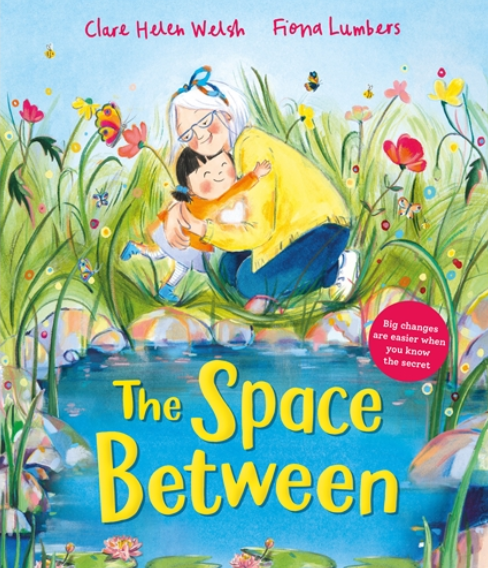
The Lost Robot
By Joe Todd Stanton
Flying Eye Books, 2026
This book was beautiful. A robot wakes up in a rubbish dump and knows it should not be there. As it walks, it remembers it belonged to a boy and tries to find him. He manages to, but sadly the boy has replaced him. The robot realises he was meant to be at the dump, so he returns. The years pass. Eventually a woman and her daughter find him, take him to the countryside and mend him. They are gentle and he now loves the parts of him that were broken. He realises where he is now is just where he is supposed to be. This is a story of healing and mending; of hope and recovery.