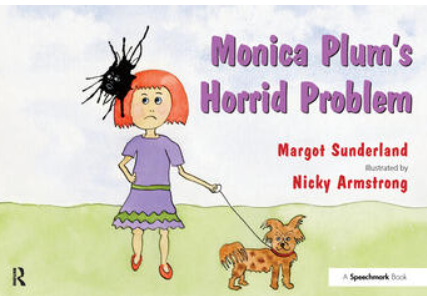
A safe place for Rufus
By Jill Seeney and Rachel Fuller. CoramBAAF adoption and fostering Academy, 2012
Rufus is a gorgeous, appealing cat. The story begins with his being adopted or fostered. We hear that he now has a favourite place where he can think his favourite thoughts about milk and pilchards. However, as a kitten he lived with a different family who sometimes shouted at him and he was sometimes very hungry. We learn that when first in his new home, he roared like a tiger if he was ever cross. Mostly we learn that bad memories pursue him, illustrated as him being chased by ghostly shapes. Rufus tries to hide in various places and eventually in the laundry basket. He struggles but only becomes more tangled. In the end, he stops struggling. It is only then that he sees sunbeams shining down on a beautiful blue cushion. At last, he discovers he is able to get free and settles there.
At the end of the book is a booklet for adults. It explains that Rufus finally gets stuck in the washing which parallels how children can get stuck with their bad feelings and become unable to move on without help. It's only once Rufus stops getting angry and running away, that he begins to feel better. The booklet clarifies that, whilst Rufus's bad memories float out the window, you need to tell the child that their bad memories will not disappear for good. Children have to be able to carry their past with them - it is our task to make the fear of the past go away. The teacher or other adult is directed to discuss with the child why Rufus doesn't need to be afraid of his memories anymore. They can ask him or her, when Rufus feels safe, will he remember without being afraid? They can also help the child think about a safe place.
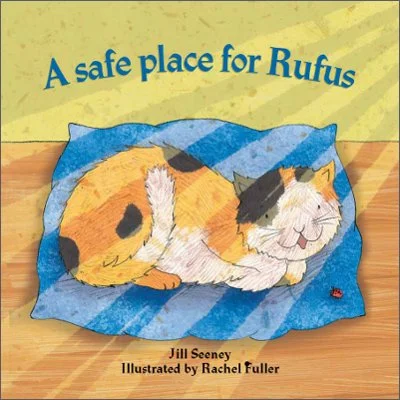
Alex and the scary things
By Melisa Moses and Alison MacEachern, Jessica Kinsley publishers 2015
Children will enjoy the inviting illustrations and meeting the engaging main character, a six year-old called Alex. He has had some scary experiences and is represented by an alligator. His experiences are not stated, which makes the book useful in a wide variety of situations.
Alex knows that some parts of himself keep him safe when he is feeling scared. He gives each part a name. Whilst the parts try to help him, it can be tricky because they can get in the way of his learning in school or making friends. When Alex is 'Spacey' he disappears into the sky and is not afraid of anything. However, he is also unable to take part in the class. He explains that he stays in the room by naming objects which he can see, hear or smell. Sometimes the scary things make him so angry he becomes ‘The Destroyer.’ Afterwards he feels bad. The book shows how Alex relaxes after anger by using breathing. When Alex is 'Puddles' he cries a lot. He has learnt to snuggle up with blankets. At other times he becomes Jumbles and gets confused in response to feeling as if the scary thing is happening when it isn't.
Most of the time he is himself. Sometimes he needs his different parts and sometimes he doesn't. He is learning to tell the difference. At the back is a note to caregivers, which explains that this book is based on Internal Family Systems Therapy. It aims to help the child and caregiver identify and manage the parts without fear or shame. The text also explains that breathing techniques and grounding are, in fact, useful for all children and adults. This would make a child feel less isolated.
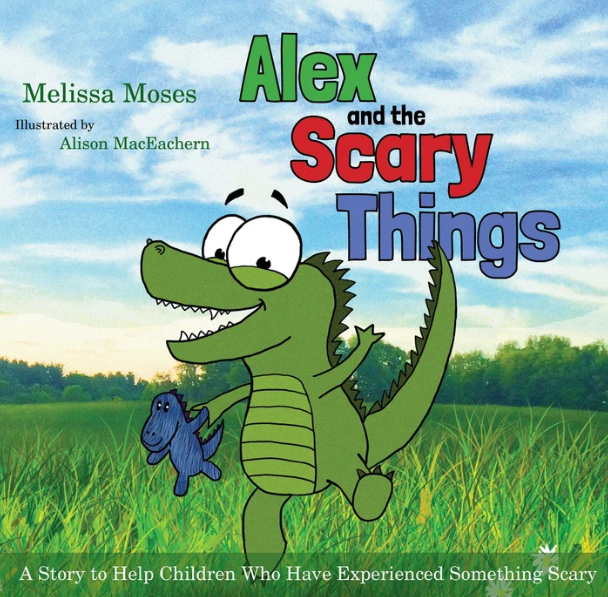
The boy who built a wall around himself
By Ali Redford and illustrated by Cara Simpson, Jessica Kinsley publishers 2016
The illustrations vividly show the main character’s strong emotions. He is simply called ‘boy’. We don’t know specifically why he built a wall around himself, which makes the book applicable to many children’s circumstances. The story is about him gradually letting someone in and letting his feelings out. Slowly he emerges from behind the wall. The book shows there is hope and a way forward. The author is an adoptive parent.
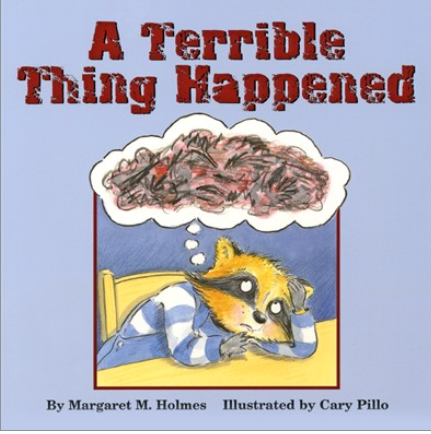
A terrible thing happened
By Margaret Holmes and Cary Pillo, Magination press, 2002
This book is about Sheridan, a raccoon who saw a terrible thing. Cleverly, the illustrations draw the terrible thing as a scribble so each child can see it as their own situation. First Sheridan tries not to think about it, however after a while he has to run faster and sing even more loudly to forget what he saw. There is a lovely picture of him singing so loudly that his friends are shocked. Sometimes he doesn't feel hungry or has a stomach-ache or feels sad but doesn't know why. There is a picture of him in an armchair looking nervous for no current reason and he is not sleeping well. He has nightmares and these are illustrated as a thought bubble with the terrible things represented as scribble. His situation makes him angry all the time, so he plays up and gets told off.
Sheridan goes and talks to Mrs Maple who is obviously a therapist. He draws pictures of how he felt when he was angry, of the pain in his stomach, of his bad dreams and of the fear he felt. Finally, he draws the terrible thing, as a dark black and red scribble. Once he has let his feelings out, he doesn't feel so angry. At the end there is a two page note to parents and caregivers, written by a grief counsellor. It gives 15 tips on how to help a child who has experienced trauma. It also has a page of helpful resources.
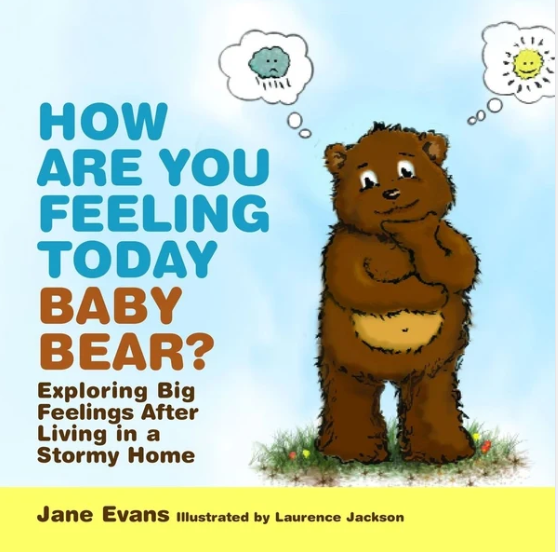
How are you feeling today Baby bear: Exploring big feelings after living in a stormy home
by Jane Evans and Laurence Jackson, Jessica Kinsley publishers 2014
This book's approach is to describe feelings physically in the body. For example, when the bear is happy, he is described as having 'a tummy full of sunshine' and when he is unhappy, he is full of 'grey rainy feelings' on the inside. The book explains that these are to do with the storms and sad faces that have kept him awake at night. The author has included a letter to children. It explains that the aim is to help them find names for big feelings so that they can have more sunshiny, good feelings. It has a practical technique of putting a box of emotions at the bottom of the page. The reader has to say which one the bear is feeling today. It describes baby bear as loving to chase butterflies and make mud pies. These fil his tummy with sunshine. The box asks how do you think he is feeling today? Excited, worried, happy, tired or something else.
In terms of plot, one day the little bear is woken up by a storm happening downstairs with crashes, bangs and whooshes. The next day, one of the big bears look sad and the other says nothing and goes out. There is a broken cup and a knocked over chair in the picture. This pattern continues and the little bear finds it hard to sleep. One day one of the big bears leaves. The nursery gets the little bear someone to talk to. Once he finds words for his feelings he feels better. At the end is a guide to using the story. It talks about how 'implicit' memories stay in a child's brain and body, but they need words to make the memories 'explicit'. Only then can the feelings and memories move outside them so they can live a more comfortable life.
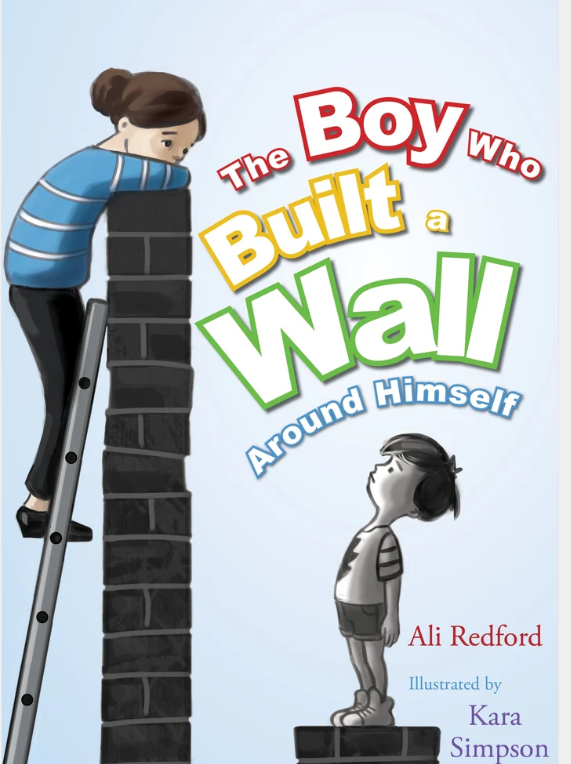
Monica Plum's Horrid Problem
by Margot Sutherland and Nicky Armstrong, Speechmark Books 2013
I suspect some schools will find this book slightly uncomfortable because it shows how children often have adult problems placed on them. The ending suggests schools are not as well placed to help as they would like to be.
The illustrations are powerful in that Monica's problem, portrayed as a spider-like shape, is permanently stuck to her. Wherever Monica goes her problem comes too. It gets under her pillow so she can't sleep properly, it turns her dreams into nightmares, it gets into her homework so that she makes mistakes. Other people tell her to smile but it doesn't help. She has strong feelings like anger and fear.
When the class is asked to draw a home, she draws a house of smashed up things, fighting, fear and tears. Billy, Finn and Chloe draw similar. Chloe refuses to talk about it but Billy and Finn agree with her. They too are drawn with problems as spider-like blobs stuck on them. Monica dreams that night about children trying to carry grown-ups. Others have to carry huge bags and suitcases. A teacher tells her she needs a knight who won't let go of her and will stay with her until she feels warm and safe inside.
The three children find a magic world out the back of the bike sheds. It is full of children carrying heavy baggage. They meet a knight who says the best way to get help with problems is to talk to someone about them. The children talk about their drawings. One child asks if he is mad and the knight explains that no he is not but, if we're too alone from no one helping it's maddening.
Next, the knight teaches them to practice dealing with what life throws at them. They learn how to build shelters and a raft. It feels okay because they're doing it together. Finally, the Knight tells them not to see only the horrid problem. It would mean they have their back to lovely things in the world. They are directed to 'never forget to turn around.'
Back in school one child asks for a Knight and the headteacher says there aren't any. So the children go to find their own.