Feeling Different – But finding you are fine as you: Neurodiversity: Autism and Dyslexia
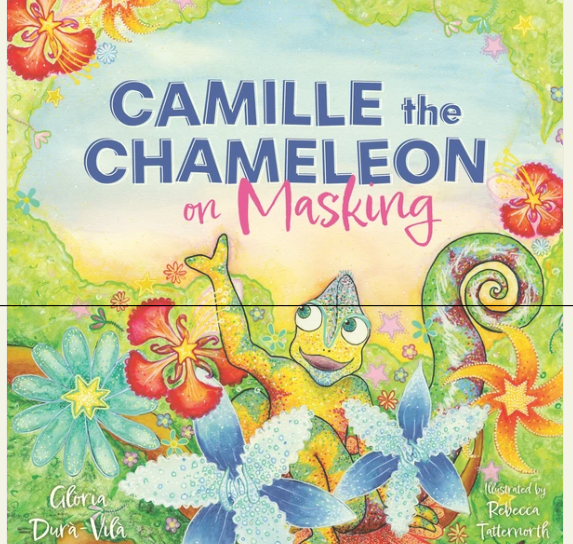
Camille the Chameleon on Masking:
How to stop masking and discover your awesome autistic self
Gloria Dura-Vila and Rebecca Tatternorth, JKP 2025
As the title suggests, the focus of this book is masking, where an autistic child hides their struggles. They camouflage to fit in, much like a chameleon. However, doing so is terrible for their mental health. It is so draining that many young people will become distressed (melt down) or freeze (shut down). More sadly, no one knows the child’s true self. The book’s message is that it is better not to mask.
The story emphasises that being autistic is not a negative way to be and that it is ok not to live like a neuro-typical person. It is realistic about self-advocacy. The story shows that if you do not ask for help, no one will help. However, it acknowledges that when an autistic child needs some help or understanding, there are some people who will not give it. It explains that some people will not even believe the child needs help. It gives worked examples of how to support a child. The illustrations are a joy to look at which children will love.
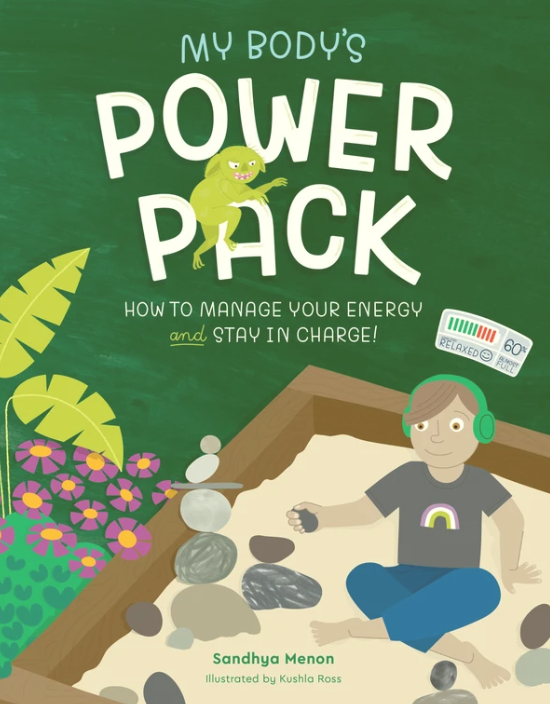
My body‘s power pack:
How to manage your energy and stay in charge, Sandhya Menon, illustrated by Kushla Ross
JKP 2025
The idea of this book is that everyone has a battery inside themselves. Like the boy in this story, they need to discover what makes their energy rise or fall. It shows that some people drain more quickly than others. It explains that being anxious, sad or unwell can drain a person’s battery. Gremlins are shown to take pleasure in the boy’s power draining. As in Camille the chameleon, the story explains that falling energy feels dreadful, but no one is likely to notice it happening except the child. Soon, he might shut down, run or lash out. Vitally, the story explains that this is only part of a child, not his whole personality. This would boost the child’ self-compassion, self-worth and explain the reality to others. It is also made clear that everyone has a unique powerpack that may drain quickly or slowly. The boy works out how to recharge. Examples include a snack, a rest on a sofa or a hug. The illustrations show adults supporting him, but the message is that what he needs is to work out how he can help himself to recharge. This gives him some control. I appreciated that the author explains she is neurodivergent and uses energy budgeting to support her own power pack.
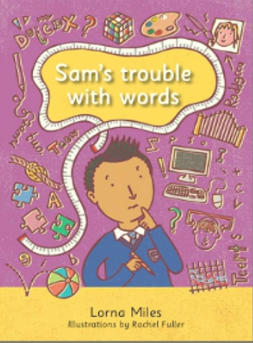
Sam’s Trouble with Words
by Lorna Miles and Rachel Fuller, Coram, 2014.
Sam is in foster care and initially, neither he nor anyone else suspects he may be dyslexic. He has an incredible range of ruses to avoid producing written work, from broken pencils and pens to urgent bathroom needs. Sam is convinced his foster family will not want him if they find out. Sadly, he believes he would have to change families and move schools. Fortunately, there is a happy ending.
I would recommend this book for a range of reasons. Firstly, the interweaving of undiagnosed dyslexia and foster care is likely to be relevant for a lot of children. Secondly, the book gains more emotional depth because Sam becomes friends with a girl with global developmental delay. The story is honest that he doesn’t want to at first because she is sometimes teased for her difficulties. Particularly because of his own struggles, he is worried it will reflect on him. Eventually, though they become best friends. The demystifying of dyslexia assessments would also be helpful for families. The font is dyslexic friendly and there is a wonderful illustration of famous dyslexic people.
Feeling Different – But finding you are fine as you: Navigating life without one limb
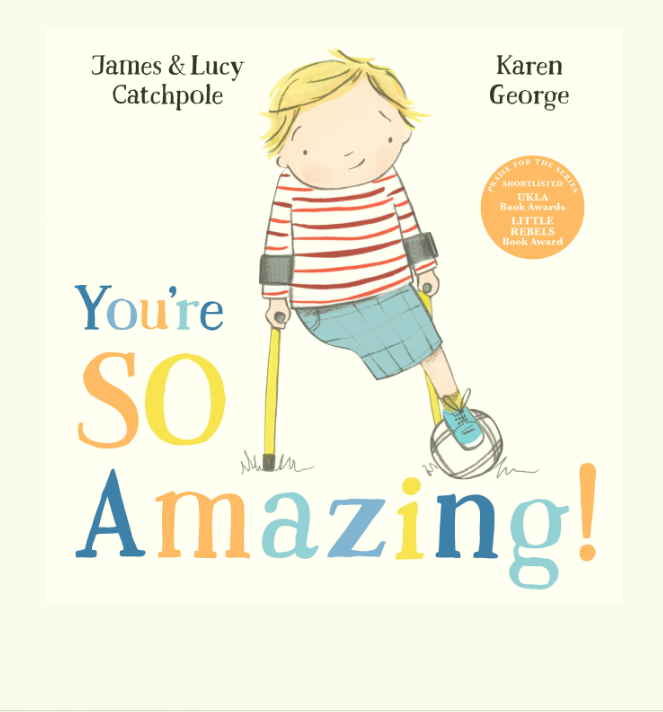
You’re so Amazing
By James and Lucy Catchpole, illustrated by Karen George
Faber and Faber 2023
This book was very funny as well as thought provoking. The boy is an amputee, and everyone therefore thinks he is amazing, even when he simply scratches his backside. He dislikes this but being pitied is worse. Eventually he is able to simply be himself with his friends. The note to adults explains that most people push their own stories onto a disabled person. The adult might feel, for example, inspired, sad or pitying. However, if allowed, disabled children have their own stories.
Feeling Different – But finding you are fine as you: Navigating Mental Health: OCD
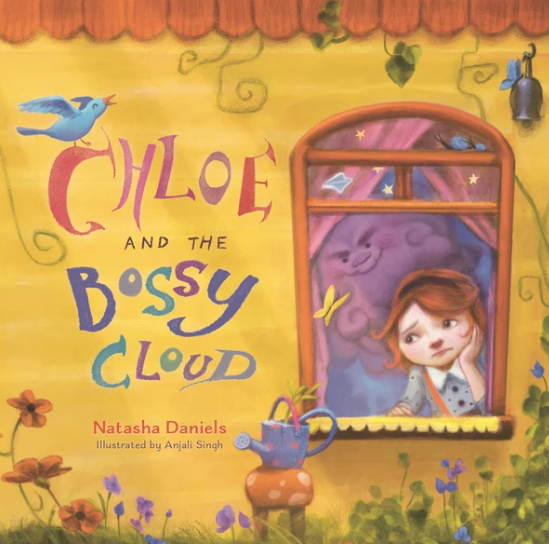
Chloe and the Bossy Cloud, Natasha Daniels and Anjali Singh, JKP 2025
What I loved about this book is that its creativity has not been held back for the sake of being didactic. Instead, we see a girl with a domineering cloud. OCD is not even mentioned yet. I also much enjoyed how the cloud is drawn. Its swirls even seem to reach out to Cloe as it begins to control her. The story shows how the OCD is not only about Cloe’s own actions. She even needs her parents to say they love her in a particular way, or they must repeat it.
Her mum’s helpful tips, from a book, are clear but not overwhelming. Chloe shows other children they can stand up to their cloud’s and enjoy life again. This is expanded in the adult’s guide at the back.
I have classified this under ‘mental health conditions’ but only for simplicity. I am not a fan of outside imposed labels.